


Small businesses don’t usually collapse overnight. What happens instead is slower and more frustrating. Margins get thinner, costs creep up, and suddenly things that used to work… don’t anymore.
A lot of that damage sits inside the supply chain. Not in one big mistake, but in small inefficiencies that repeat daily. Easy to ignore. Expensive to keep.
- Poor Inventory Visibility
Too much stock sits untouched, quietly draining cash. At the same time, fast-moving items run out at the worst possible moment. Sales are missed, customers move on, and the cycle repeats.
Plenty of small businesses still depend on spreadsheets or manual tracking. That sometimes works, until soon it doesn’t. Once order volume grows, those systems start lagging behind reality.
According to Deloitte, better inventory systems can cut holding costs significantly. Yet many businesses delay upgrading, assuming it’s too complex or expensive. In most cases, the real cost is waiting too long.
- Inefficient Storage Utilisation
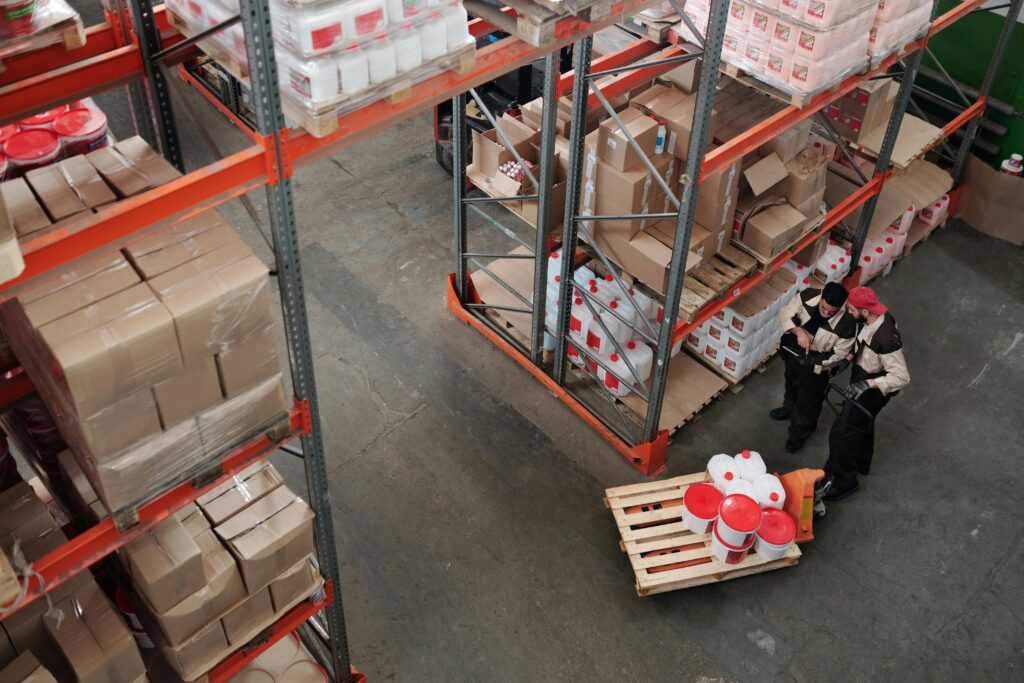
Walk into most small warehouses, and there’s usually no clear system, just adjustments made over time. Shelves added where they fit. Products stacked where there’s room. It works, but not efficiently.
The bigger issue is what’s not questioned. Storage materials, stacking methods, and unused vertical space; these details quietly reduce capacity.
Even something as simple as switching to better handling equipment can shift the equation. For instance, nestable pallets take up far less room when empty, which directly affects both storage and return logistics.
No major fix required. Just better choices.
- Fragmented Supplier Networks
Flexibility sounds good until it turns into inconsistency.
Working with too many suppliers often leads to uneven pricing, variable quality, and delays that are hard to predict. There’s also the hidden admin cost: more communication, more follow-ups, more room for error. Without proper tracking, it’s difficult to know which suppliers are actually performing.
Insights from McKinsey & Company suggest that businesses with tighter supplier networks tend to see more stable costs and fewer disruptions. Not because they have fewer options but because they manage them better.
- Reactive Logistics Planning
Last-minute decisions are expensive. Booking shipments when they’re urgently needed usually means paying higher rates. Routes get adjusted on the fly. Deliveries become less predictable.
It feels like staying flexible, but it’s really just losing control. Even basic planning, such as grouping shipments, forecasting demand, and locking in schedules, can bring costs down noticeably. Nothing advanced. Just less reacting, more anticipating.
- Packaging and Material Waste
Packaging doesn’t get much attention. But, it should.
Boxes that are too large increase shipping costs. Weak materials lead to damage and returns. Both hit margins in ways that don’t always show up immediately.
There’s also a tendency to “play it safe” with packaging, which often means overpacking. That safety comes at a price.
Businesses that regularly review their packaging usually find easy wins, such as smaller sizes, better materials, and less waste.
- Lack of Data-Driven Decisions
Most businesses have data. Few actually use it properly. Decisions end up based on instinct, past habits, or urgency. Sometimes that works. Often, it doesn’t scale.
Simple metrics, such as order accuracy, fulfilment time, and return rates, can highlight where money is slipping through. The problem isn’t complexity. It’s consistency.
Even a basic dashboard can shift decision-making from reactive to informed.
- Returns and Reverse Logistics
Returns are part of the game now, especially in e-commerce. Ignoring their cost is where the problem starts.
Processing returns takes time. Damaged goods can’t always be resold. Restocking adds friction. It all adds up. Without a clear system, returns become messy and expensive.
Better packaging, clearer policies, and structured handling can reduce that impact. Not eliminate it, but control it.
Final Thought
There’s rarely a single point where money is lost. It’s spread across dozens of small decisions how stock is tracked, how goods are stored, and how shipments are planned. That’s the uncomfortable part. There’s no one fix.
But there is an advantage: small businesses can adjust faster. No layers, no long approvals. Changes can happen quickly if the problems are actually acknowledged. Most inefficiencies aren’t hidden. They’re just tolerated for too long.